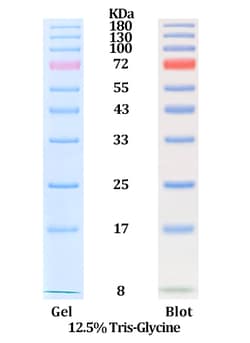
Protein Molecular Weight Markers
- (1)
- (1)
- (1)
- (1)
- (1)
- (39)
- (2)
- (19)
- (1)
- (2)
- (1)
- (1)
- (2)
- (2)
- (1)
- (1)
- (2)
- (2)
- (1)
- (2)
- (2)
- (1)
- (4)
- (1)
- (1)
- (1)
- (1)
- (1)
- (2)
- (3)
- (3)
- (1)
- (1)
- (2)
- (2)
- (1)
- (1)
- (2)
- (4)
- (2)
- (1)
- (1)
- (1)
- (4)
- (1)
- (2)
- (3)
- (1)
- (1)
- (2)
- (3)
- (13)
- (1)
- (3)
- (2)
- (5)
- (3)
- (2)
- (9)
- (3)
- (5)
- (2)
- (1)
- (1)
- (3)
- (2)
- (9)
- (9)
- (1)
- (7)
- (2)
- (1)
- (2)
- (2)
- (3)
- (1)
- (24)
Filtered Search Results
ABclonal Technology NOTCH2 Rabbit pAb
Small and Specialty Supplier Partner
Small and/or specialty supplier based on Federal laws and SBA requirements.
Learn More
Small and/or specialty supplier based on Federal laws and SBA requirements.
Learn More
This gene encodes a member of the Notch family, a group of Type 1 transmembrane proteins with an extracellular domain containing multiple epidermal growth factor-like (EGF) repeats and an intracellular domain with diverse domains. Notch family proteins regulate developmental processes by controlling cell fate decisions through an evolutionarily conserved intercellular signaling pathway. In Drosophila, Notch interacts with ligands (delta, serrate) to regulate development, and similar ligands have been identified in humans, though their interactions with human Notch proteins are not fully understood. This protein is cleaved in the trans-Golgi network and presented as a heterodimer on the cell surface, acting as a receptor for membrane-bound ligands. It may be involved in vascular, renal, and hepatic development. Two transcript variants encoding different isoforms have been identified.
Non-distribution item offered as a customer accommodation; additional freight charges may apply.
Learn More
ABclonal Technology TCTA Rabbit pAb
Small and Specialty Supplier Partner
Small and/or specialty supplier based on Federal laws and SBA requirements.
Learn More
Small and/or specialty supplier based on Federal laws and SBA requirements.
Learn More
Involved in negative regulation of osteoclast differentiation and osteoclast fusion. Predicted to be integral component of membrane.
Non-distribution item offered as a customer accommodation; additional freight charges may apply.
Learn More
ABclonal Technology GALK1 Rabbit pAb
Small and Specialty Supplier Partner
Small and/or specialty supplier based on Federal laws and SBA requirements.
Learn More
Small and/or specialty supplier based on Federal laws and SBA requirements.
Learn More
Galactokinase is a major enzyme for the metabolism of galactose and its deficiency causes congenital cataracts during infancy and presenile cataracts in the adult population.
Non-distribution item offered as a customer accommodation; additional freight charges may apply.
Learn More
ABclonal Technology SNW1 Rabbit pAb
Small and Specialty Supplier Partner
Small and/or specialty supplier based on Federal laws and SBA requirements.
Learn More
Small and/or specialty supplier based on Federal laws and SBA requirements.
Learn More
This gene, a member of the SNW gene family, encodes a coactivator that enhances transcription from some Pol II promoters. This coactivator can bind to the ligand-binding domain of the vitamin D receptor and to retinoid receptors to enhance vitamin D-, retinoic acid-, estrogen-, and glucocorticoid-mediated gene expression. It can also function as a splicing factor by interacting with poly(A)-binding protein 2 to directly control the expression of muscle-specific genes at the transcriptional level. Finally, the protein may be involved in oncogenesis since it interacts with a region of SKI oncoproteins that is required for transforming activity. Alternative splicing results in multiple transcript variants.
Non-distribution item offered as a customer accommodation; additional freight charges may apply.
Learn More
ABclonal Technology KIF2C/MCAK Rabbit mAb
Small and Specialty Supplier Partner
Small and/or specialty supplier based on Federal laws and SBA requirements.
Learn More
Small and/or specialty supplier based on Federal laws and SBA requirements.
Learn More
This gene encodes a kinesin-like protein that functions as a microtubule-dependent molecular motor. The encoded protein can depolymerize microtubules at the plus end, thereby promoting mitotic chromosome segregation. Alternative splicing results in multiple transcript variants.
Non-distribution item offered as a customer accommodation; additional freight charges may apply.
Learn More
ABclonal Technology ATP5C1 Rabbit pAb
Small and Specialty Supplier Partner
Small and/or specialty supplier based on Federal laws and SBA requirements.
Learn More
Small and/or specialty supplier based on Federal laws and SBA requirements.
Learn More
This gene encodes a subunit of mitochondrial ATP synthase. Mitochondrial ATP synthase catalyzes ATP synthesis, utilizing an electrochemical gradient of protons across the inner membrane during oxidative phosphorylation. ATP synthase is composed of two linked multi-subunit complexes the soluble catalytic core, F1, and the membrane-spanning component, Fo, comprising the proton channel. The catalytic portion of mitochondrial ATP synthase consists of 5 different subunits (alpha, beta, gamma, delta, and epsilon) assembled with a stoichiometry of 3 alpha, 3 beta, and a single representative of the other 3. The proton channel consists of three main subunits (a, b, c). This gene encodes the gamma subunit of the catalytic core. Alternatively spliced transcript variants encoding different isoforms have been identified. This gene also has a pseudogene on chromosome 14.
Non-distribution item offered as a customer accommodation; additional freight charges may apply.
Learn More
ABclonal Technology PLD2 Rabbit pAb
Small and Specialty Supplier Partner
Small and/or specialty supplier based on Federal laws and SBA requirements.
Learn More
Small and/or specialty supplier based on Federal laws and SBA requirements.
Learn More
The protein encoded by this gene catalyzes the hydrolysis of phosphatidylcholine to phosphatidic acid and choline. The activity of the encoded enzyme is enhanced by phosphatidylinositol 4,5-bisphosphate and ADP-ribosylation factor-1. This protein localizes to the peripheral membrane and may be involved in cytoskeletal organization, cell cycle control, transcriptional regulation, and/or regulated secretion. Two transcript variants encoding different isoforms have been found for this gene.
Non-distribution item offered as a customer accommodation; additional freight charges may apply.
Learn More
ABclonal Technology CAND2 Rabbit pAb
Small and Specialty Supplier Partner
Small and/or specialty supplier based on Federal laws and SBA requirements.
Learn More
Small and/or specialty supplier based on Federal laws and SBA requirements.
Learn More
Predicted to enable TBP-class protein binding activity. Predicted to be involved in SCF complex assembly, positive regulation of transcription, DNA-templated, and protein ubiquitination. Located in cytosol.
Non-distribution item offered as a customer accommodation; additional freight charges may apply.
Learn More
ABclonal Technology CDK1 Rabbit pAb
Small and Specialty Supplier Partner
Small and/or specialty supplier based on Federal laws and SBA requirements.
Learn More
Small and/or specialty supplier based on Federal laws and SBA requirements.
Learn More
The protein encoded by this gene is a member of the Ser/Thr protein kinase family. This protein is a catalytic subunit of the highly conserved protein kinase complex known as M-phase promoting factor (MPF), which is essential for G1/S and G2/M phase transitions of eukaryotic cell cycle. Mitotic cyclins stably associate with this protein and function as regulatory subunits. The kinase activity of this protein is controlled by cyclin accumulation and destruction through the cell cycle. The phosphorylation and dephosphorylation of this protein also play important regulatory roles in cell cycle control. Alternatively spliced transcript variants encoding different isoforms have been found for this gene.
Non-distribution item offered as a customer accommodation; additional freight charges may apply.
Learn More
ABclonal Technology MESDC2 Rabbit pAb
Small and Specialty Supplier Partner
Small and/or specialty supplier based on Federal laws and SBA requirements.
Learn More
Small and/or specialty supplier based on Federal laws and SBA requirements.
Learn More
Predicted to enable low-density lipoprotein particle receptor binding activity. Involved in ossification and protein folding. Located in endoplasmic reticulum. Implicated in osteogenesis imperfecta type 20.
Non-distribution item offered as a customer accommodation; additional freight charges may apply.
Learn More
ABclonal Technology DHRS11 Rabbit pAb
Small and Specialty Supplier Partner
Small and/or specialty supplier based on Federal laws and SBA requirements.
Learn More
Small and/or specialty supplier based on Federal laws and SBA requirements.
Learn More
Enables 17-beta-hydroxysteroid dehydrogenase (NADP+) activity, 17-beta-ketosteroid reductase activity, and 3-keto sterol reductase activity. Involved in steroid biosynthetic process. Predicted to be located in extracellular region.
Non-distribution item offered as a customer accommodation; additional freight charges may apply.
Learn More
ABclonal Technology LTBP3 Rabbit pAb
Small and Specialty Supplier Partner
Small and/or specialty supplier based on Federal laws and SBA requirements.
Learn More
Small and/or specialty supplier based on Federal laws and SBA requirements.
Learn More
The protein encoded by this gene forms a complex with transforming growth factor beta (TGF-beta) proteins and may be involved in their subcellular localization. Activation of this complex requires removal of the encoded binding protein. This protein also may play a structural role in the extracellular matrix. Three transcript variants encoding different isoforms have been found for this gene.
Non-distribution item offered as a customer accommodation; additional freight charges may apply.
Learn More
ATCC RAN-2
RAN-2
Non-distribution item offered as a customer accommodation; additional freight charges may apply.
Learn More
ABclonal Technology MCCC1 Rabbit pAb
Small and Specialty Supplier Partner
Small and/or specialty supplier based on Federal laws and SBA requirements.
Learn More
Small and/or specialty supplier based on Federal laws and SBA requirements.
Learn More
This gene encodes the large subunit of 3-methylcrotonyl-CoA carboxylase. This enzyme functions as a heterodimer and catalyzes the carboxylation of 3-methylcrotonyl-CoA to form 3-methylglutaconyl-CoA. Mutations in this gene are associated with 3-Methylcrotonylglycinuria, an autosomal recessive disorder of leucine catabolism.
Non-distribution item offered as a customer accommodation; additional freight charges may apply.
Learn More
ABclonal Technology PCDH15 Rabbit pAb
Small and Specialty Supplier Partner
Small and/or specialty supplier based on Federal laws and SBA requirements.
Learn More
Small and/or specialty supplier based on Federal laws and SBA requirements.
Learn More
This gene is a member of the cadherin superfamily. Family members encode integral membrane proteins that mediate calcium-dependent cell-cell adhesion. It plays an essential role in maintenance of normal retinal and cochlear function. Mutations in this gene result in hearing loss and Usher Syndrome Type IF (USH1F). Extensive alternative splicing resulting in multiple isoforms has been observed in the mouse ortholog. Similar alternatively spliced transcripts are inferred to occur in human, and additional variants are likely to occur.
Non-distribution item offered as a customer accommodation; additional freight charges may apply.
Learn More